Decoding the Gartner Magic Quadrant for Cloud ERP: Your Guide to Choosing the Right System
So, you’re diving into the world of Cloud ERP. Congratulations! That’s a big step, a real commitment to streamlining your business processes and leveraging technology for growth. But then you stumble upon the Gartner Magic Quadrant for Cloud ERP, and suddenly, you’re drowning in a sea of acronyms, quadrants, and vendor positioning. Don’t worry, I’ve been there. I’ve spent years wading through this stuff, helping businesses like yours navigate the complexities of enterprise software selection. Let me pull you out of the deep end and help you understand what this seemingly impenetrable chart actually means.
This isn’t just some abstract academic exercise; the Gartner Magic Quadrant directly impacts your bottom line. It’s a powerful tool, a roadmap that can save you months, even years, of wasted time and resources on a poorly chosen system. Think of it as a sophisticated filter, sifting through the noise of hundreds of ERP vendors to highlight the players truly worth considering. It’s not a perfect system, of course – no evaluation ever is – but it provides a valuable framework for your due diligence. The key is to understand how it works, what its limitations are, and how to use its insights to inform your own decision-making process. Don’t just blindly follow the rankings; use the report as a springboard for your own research, a starting point for a deeper dive into the specific needs of your business. Remember, the "best" ERP isn’t a one-size-fits-all solution. It’s the one that best fits your unique circumstances. That’s the crucial takeaway. You need to go beyond the simple placement on the chart and understand the nuanced reasoning behind it.
The Magic Quadrant itself is a visual representation of Gartner’s analysis of various Cloud ERP vendors. They categorize these vendors based on two key dimensions: completeness of vision and ability to execute. Completeness of vision refers to a vendor’s strategic direction, market understanding, and innovation. It’s about their long-term strategy, their ability to anticipate future market trends, and their commitment to developing cutting-edge features. Ability to execute, on the other hand, is a measure of a vendor’s operational capabilities, their customer support, and their overall track record. This includes factors like their product’s reliability, scalability, and the quality of their implementation services. These two dimensions are plotted on a graph, creating four quadrants: Leaders, Challengers, Visionaries, and Niche Players. Each quadrant represents a different strategic position, indicating the vendor’s strengths and weaknesses. Leaders, for example, are typically those who excel in both completeness of vision and ability to execute. They’re often established players with a strong market presence and a proven track record of success. Challengers might have a strong ability to execute but may lack the same forward-thinking vision as the Leaders. Visionaries, conversely, may have a compelling vision for the future but may not yet have the market share or execution capabilities to match. Finally, Niche Players often focus on specific industry segments or functional areas, catering to a more specialized audience. Understanding these distinctions is critical to interpreting the report’s findings. It’s not just about picking the top left corner; it’s about understanding the trade-offs and choosing the vendor that aligns with your specific needs and risk tolerance.
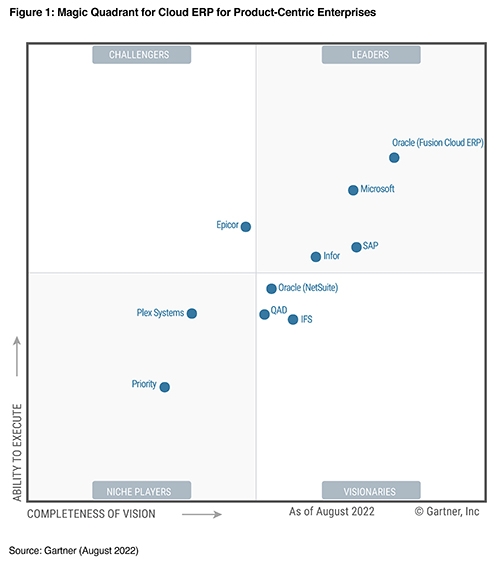
The beauty of the Gartner Magic Quadrant lies in its ability to distill a complex landscape into a digestible format. However, remember that this is just one piece of the puzzle. Don’t solely rely on this report for your decision. It’s a starting point, not the end-all, be-all. Consider it a valuable compass, but you still need to navigate the terrain yourself. The report’s methodology, while rigorous, is based on Gartner’s own research and analysis. Their criteria might not perfectly align with your own priorities. For example, Gartner might prioritize certain features or functionalities that are less relevant to your business. Conversely, they might overlook aspects that are critical to your success. Therefore, you should use the Magic Quadrant as a starting point to identify potential vendors, then conduct your own thorough investigation. This means talking to other businesses that use these systems, requesting demos, and carefully reviewing the vendor’s documentation. Look beyond the marketing materials and delve into the fine print. Pay attention to the total cost of ownership, including implementation costs, ongoing maintenance fees, and the potential for hidden expenses. Don’t underestimate the importance of user experience and the level of support provided by the vendor. A powerful ERP system is useless if your employees can’t effectively use it or if you lack adequate support when issues arise. This detailed due diligence is where you’ll truly differentiate the contenders.
Beyond the Quadrants: Unveiling the Nuances of Cloud ERP Selection
While the Gartner Magic Quadrant provides a high-level overview, the real work begins when you delve into the specific details of each vendor. The report offers valuable insights into each vendor’s strengths and weaknesses, but it doesn’t tell the whole story. For instance, a vendor positioned as a "Leader" might excel in certain areas but fall short in others. Perhaps their customer support is exceptional, but their pricing model is less competitive. Or maybe their platform is highly scalable but lacks the specific industry-specific functionalities you require. This is where your own research becomes crucial. You need to go beyond the simple quadrant placement and examine the detailed vendor profiles provided in the report. These profiles often include information on the vendor’s target market, its product capabilities, its customer base, and its overall market strategy. This granular data allows you to assess whether a particular vendor’s offering aligns with your specific needs and priorities. For example, a small business with limited resources might prioritize affordability and ease of use, while a large enterprise might prioritize scalability and advanced analytics. The Gartner report should inform your own criteria, not dictate them.
This is where the human element really shines. The Gartner Magic Quadrant, while analytical, can’t capture the nuances of human interaction, the subtleties of company culture, or the intangible aspects of vendor relationships. You need to talk to vendors directly. Request demos, ask tough questions, and assess the responsiveness and expertise of their sales and support teams. Consider the overall impression they make. Do they seem genuinely interested in understanding your business needs? Do they offer solutions tailored to your specific challenges, or are they simply trying to sell you a pre-packaged product? This kind of personal interaction is invaluable and can often reveal insights that are missed in purely analytical reports. And don’t forget to talk to other users. Seek out references and case studies. Find companies in your industry that have implemented the systems you’re considering. Ask them about their experiences—both the good and the bad. What are the biggest advantages and disadvantages they’ve encountered? What would they do differently if they were starting the process again? These real-world perspectives can provide invaluable insights that you won’t find in any marketing materials or analyst reports. Remember, the ultimate goal is to find a system that integrates seamlessly into your workflows, empowers your employees, and drives sustainable growth.
Don’t let the technical jargon and complex terminology intimidate you. Remember, the goal is to find the right ERP system to support your business goals. The Gartner Magic Quadrant is a tool, a guide, but it’s not a magic bullet. It’s crucial to remember that the "best" ERP system is highly subjective and depends on your specific needs, budget, and business objectives. What works for one company might not work for another. Therefore, don’t blindly follow the rankings. Instead, use the Gartner Magic Quadrant as a starting point to identify potential vendors and then conduct your own in-depth research. This involves reviewing vendor profiles, talking to other users, requesting demos, and carefully evaluating the total cost of ownership. Remember to consider factors like implementation time, training requirements, and ongoing maintenance costs. A thorough and well-informed decision is crucial to ensure a successful ERP implementation. Don’t rush into a decision; take your time, do your homework, and choose the system that best aligns with your unique business requirements. The investment in time and effort will pay off handsomely in the long run.
Navigating the Challenges and Opportunities: A Practical Approach
One of the biggest challenges in navigating the Gartner Magic Quadrant is the sheer volume of information. The report itself is quite extensive, and understanding its nuances requires careful reading and analysis. It’s easy to get lost in the details, to become overwhelmed by the technical jargon and complex terminology. To avoid this, I recommend starting with a clear understanding of your own business needs and priorities. Before even looking at the Gartner Magic Quadrant, define your key requirements. What are your biggest pain points? What are your strategic goals? What functionalities are essential for your business to operate effectively? Having a clear understanding of these factors will help you focus your attention on the vendors that are most relevant to your needs. Once you have a clear understanding of your requirements, you can use the Gartner Magic Quadrant to identify potential vendors that align with your criteria. This will significantly reduce the number of vendors you need to evaluate, making the selection process more manageable. It’s a process of elimination, starting with your specific needs, then filtering through the Gartner analysis to find the best matches.
Another challenge is the inherent subjectivity of the Gartner Magic Quadrant. While Gartner uses a rigorous methodology, their evaluation criteria might not perfectly align with your own priorities. Their assessment is based on a combination of quantitative and qualitative factors, including market share, customer satisfaction, product capabilities, and financial performance. However, the weight given to each factor might not reflect your own business priorities. For instance, Gartner might prioritize certain features or functionalities that are less relevant to your business, while overlooking aspects that are critical to your success. To address this challenge, you need to supplement the Gartner Magic Quadrant with your own research. Talk to other businesses that have implemented the systems you’re considering, request demos, and carefully review the vendor’s documentation. Don’t rely solely on marketing materials; dig deeper to understand the real-world experiences of other users. This will give you a more comprehensive picture of each vendor’s strengths and weaknesses and help you make a more informed decision.
Finally, remember that the Gartner Magic Quadrant is just one piece of the puzzle. It’s a valuable tool, but it’s not the only factor you should consider when choosing a Cloud ERP system. You need to integrate the insights from the report with your own research and due diligence. Consider factors such as total cost of ownership, implementation time, training requirements, and ongoing maintenance costs. Assess the vendor’s customer support capabilities, their reputation in the industry, and their overall commitment to customer success. The right ERP system will not only streamline your business processes but also empower your employees and drive sustainable growth. Choosing the right system is a strategic decision that will impact your business for years to come, so take your time, do your homework, and choose wisely. The Gartner Magic Quadrant is a powerful tool, but it’s just one piece of a much larger, more nuanced decision-making process. Remember to trust your instincts and prioritize your specific business needs above all else.