Decoding the Gartner Magic Quadrant for Cloud ERP: Your Guide to Navigating the Maze
So, you’re looking at the Gartner Magic Quadrant for Cloud ERP, huh? That sprawling, data-rich document that feels like trying to decipher ancient hieroglyphs? I get it. It’s dense, it’s technical, and frankly, it can be intimidating. But don’t let that stop you. This isn’t some arcane ritual reserved for IT gurus; understanding this quadrant is key to making informed decisions about your company’s future. We’re going to break it down, piece by piece, so you can actually use this information to your advantage. Think of me as your sherpa, guiding you through the icy peaks of ERP software selection.
The first thing you need to grasp is what the Magic Quadrant actually is. It’s not a definitive "best of" list. Gartner, a respected research and advisory firm, uses a complex methodology to evaluate vendors based on their completeness of vision and ability to execute. "Completeness of vision" looks at a vendor’s long-term strategy, innovation, market understanding, and overall direction. "Ability to execute" assesses their current capabilities, product performance, customer support, and market responsiveness. They plot each vendor on a graph, creating four quadrants: Leaders, Challengers, Visionaries, and Niche Players. It’s a snapshot in time, remember – things change rapidly in the tech world. What’s top-dog this year might be playing catch-up next. Don’t treat it as gospel, but rather as a valuable tool for comparison and initial screening. Think of it less as a definitive answer and more as a starting point for your own thorough due diligence. After all, your specific business needs are unique, and the "best" ERP for one company might be a disaster for another. The sheer volume of data involved in the report itself can be overwhelming, but focusing on the key takeaways and understanding the methodology behind the ranking can significantly improve your understanding of the market landscape. You’ll see vendors you’ve heard of, and others that might be completely new to you. That’s part of the value – discovering potential solutions you might not have considered otherwise. This isn’t just about picking a name from a list; it’s about understanding the strategic implications of your choice and ensuring alignment with your business goals. Consider the size of your company, the complexity of your operations, and the long-term trajectory of your business. These factors will heavily influence which quadrant and which specific vendors within those quadrants are most relevant to your needs.
Now, let’s talk about what those quadrants actually mean. The "Leaders" quadrant typically houses the established players with a strong market share, a comprehensive product suite, and a proven track record. These vendors often have the resources and the experience to handle large, complex deployments. However, this doesn’t automatically translate to "best." They might be more expensive, less flexible, or less innovative than some of the other players. The "Challengers" are usually large companies with strong execution capabilities but perhaps a less forward-thinking vision. They’re often reliable but might not be at the forefront of the latest technological advancements. This doesn’t mean they’re inferior; it just means their focus might be different. They may excel in specific niches or industries, offering highly specialized features and robust support. They are often a great option for companies seeking a balance between established reliability and potentially more competitive pricing. Think of them as the steady, reliable horse in the race, not necessarily the flashy thoroughbred. Then there are the "Visionaries." These are the companies with ambitious roadmaps and innovative ideas, but perhaps they haven’t yet fully demonstrated the ability to execute on that vision at scale. They might be smaller, newer players with cutting-edge technology but a less established customer base. They are often exciting choices, full of potential, but they might involve more risk. Finally, the "Niche Players" cater to specific industries or segments of the market. They might not have the breadth of features of the Leaders, but they offer deep expertise and tailored solutions for a particular audience. They often provide a cost-effective and highly specialized solution, but their applicability might be limited to certain types of businesses. Choosing a niche player requires careful assessment of whether their specialized capabilities align with your specific needs and whether you’re comfortable with their smaller scale and potentially limited resources.
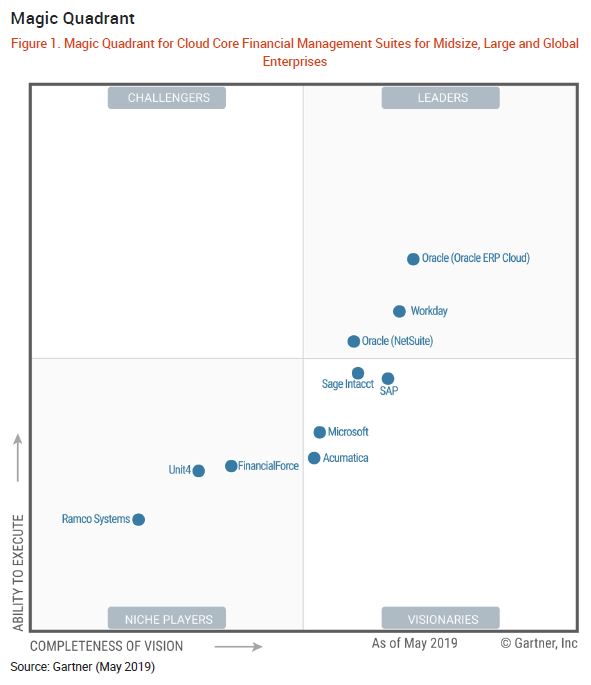
Understanding the nuances of each quadrant is crucial, but it’s only half the battle. You need to delve deeper into the individual vendor profiles within the Magic Quadrant. Gartner provides detailed assessments of each vendor, highlighting their strengths and weaknesses. Don’t just skim the report; really dig into the specifics. Look at customer reviews, case studies, and independent analyst reports. Consider factors beyond the Gartner assessment, such as the vendor’s financial stability, their customer support reputation, and their overall cultural fit with your organization. Think about the long-term implications of your choice. ERP systems are significant investments, both financially and strategically, so you need to ensure that the chosen vendor can adapt to your evolving needs over time. A system that’s perfect today might become a liability tomorrow if the vendor fails to innovate or provide adequate support. The implementation process itself is a major undertaking, so you need to factor in the vendor’s experience, resources, and methodology. Will they provide adequate training and support? Do they have a proven track record of successful implementations? These are critical questions that go beyond the simplified representation in the Magic Quadrant. It’s easy to get lost in the technical jargon and the complex scoring methodologies, but remember that the ultimate goal is to find an ERP system that aligns with your business goals, enhances your efficiency, and provides a strong foundation for future growth. Don’t let the complexity of the Gartner Magic Quadrant overwhelm you. Use it as a valuable tool, but remember to conduct your own thorough research and due diligence. The right ERP system can be a game-changer for your business, so take your time, ask questions, and make an informed decision.
Beyond the immediate analysis of the Magic Quadrant itself, consider the broader context. The cloud ERP market is constantly evolving. New technologies, such as AI and machine learning, are rapidly transforming the capabilities of these systems. The Gartner report provides a snapshot in time, but it’s important to stay abreast of the latest developments and trends. Follow industry publications, attend conferences, and network with other professionals in your field. Pay attention to what your competitors are doing and how they’re leveraging cloud ERP to gain a competitive advantage. The information within the Magic Quadrant is valuable, but it’s not a static truth. The landscape shifts constantly, with new entrants, mergers, and acquisitions reshaping the competitive dynamics. Therefore, continuous monitoring of industry news and updates is crucial to remain informed and to ensure your chosen ERP solution remains relevant and effective. Remember that technology is a moving target, and your ERP system needs to be able to adapt and evolve alongside your business. It’s not just about the software itself, but also about the vendor’s commitment to innovation, their ability to provide ongoing support and upgrades, and their understanding of the evolving needs of their customer base. Choosing an ERP system is a strategic decision that will impact your business for years to come, so it’s important to approach the selection process with a long-term perspective. Don’t just focus on the immediate needs; consider how the system will scale and adapt as your business grows and evolves. This requires a deep understanding of your own business strategy and a clear vision of your future goals.
In conclusion, while the Gartner Magic Quadrant for Cloud ERP offers a valuable framework for evaluating vendors, it’s only one piece of the puzzle. Successful ERP selection requires a holistic approach that considers your unique business needs, your long-term goals, and the evolving landscape of the cloud ERP market. Don’t be intimidated by the complexity; use this guide to navigate the maze and find the perfect solution for your organization. Remember, it’s a journey, not a sprint. Take your time, do your research, and choose wisely. The right ERP system can be a powerful catalyst for growth and success. So, take a deep breath, grab a cup of coffee, and start exploring. Your future self will thank you for it.